

More Than Green
What "Wicked" Taught Me About Parenting a Neurodiverse Teen

I never expected that the Wicked Witch of the West could give me so much empathy for my daughter.
Even though I’ve loved Wicked for over a decade, since I first saw the Broadway play and subsequently memorized the soundtrack, I had never seen it quite this way before. But the movie version opened my eyes as I recognized my daughter in Elphaba, the green-skinned protagonist.
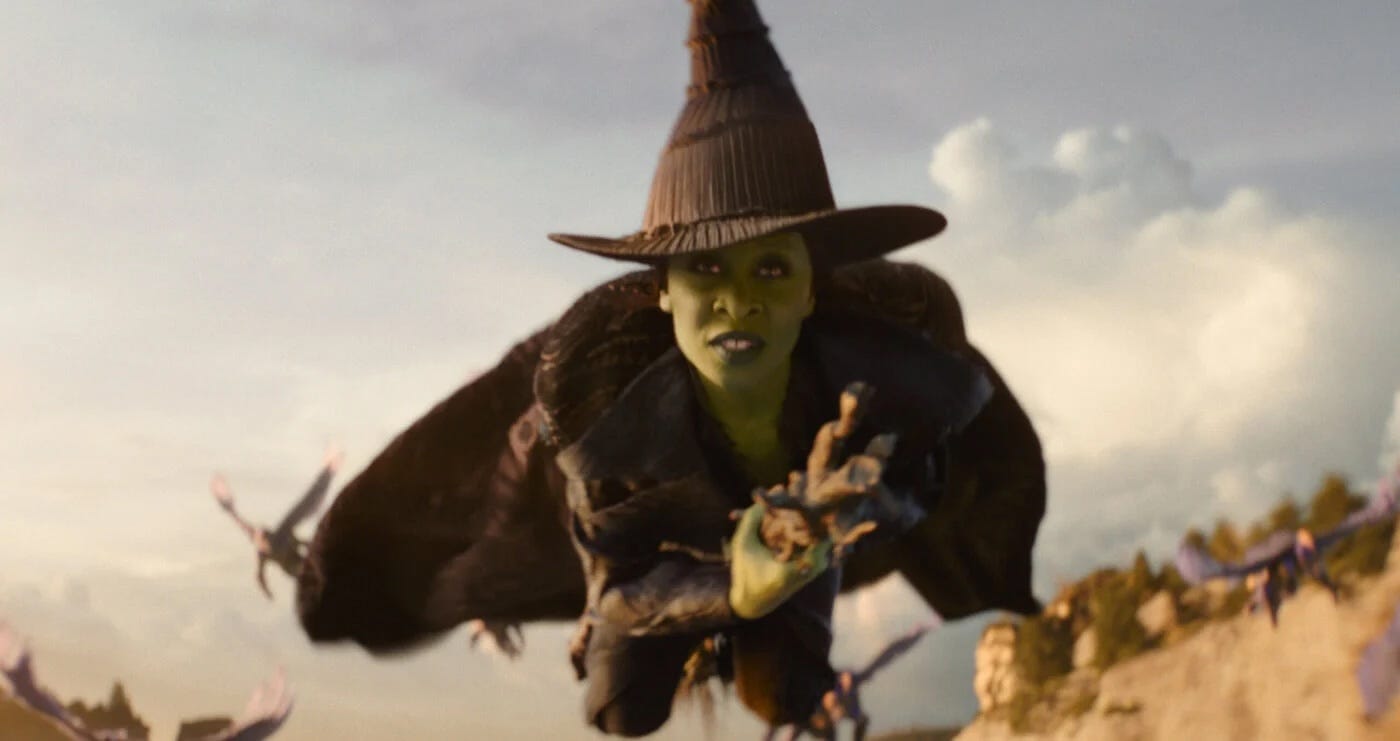
I realized that Elphaba, besides being a victim of racism, bullying, and political scapegoating, might have another characteristic. Maybe I’m biased, but here’s my theory: I suspect Elphaba, like my daughter, is on the autism spectrum.
Rewriting the Wicked Witch
If you’re not familiar with Wicked, it’s an inverse take on the 1939 movie The Wizard of Oz, based on Gregory Maguire’s novels. While the original film paints the Wicked Witch of the West as purely evil, Wicked traces Elphaba’s upbringing as a misunderstood, traumatized young girl whose green skin left her ostracized by her peers and even her father. Compared to her superficial classmates, Elphaba stands out as one of the few characters with genuine integrity and a willingness to stand up for justice.
The story begins at Shiz, a preparatory school, where Elphaba’s peers react with disgust and fear at the sight of her. When Glinda, the most popular girl at Shiz, becomes her roommate, the school turns against Elphaba entirely. In the song “What Is This Feeling?” the two describe their mutual loathing—but Elphaba sings alone while the entire student body sides with Glinda: “Poor Glinda, forced to reside with someone so disgustified... we share your loathing.” This scapegoating only intensifies throughout Elphaba’s life.
I had always understood Wicked as an ironic commentary on how “good versus evil” is never as simple as we hope, and as a confrontation with racism, political deception, and scapegoating. But after all these years, I finally noticed one more subtle element to Elphaba’s character:
Neurodiversity.
Elphaba as a Neurodiverse Character
What if Elphaba isn’t just different because of her magical abilities and her skin color, but also in how her brain works?
In case you’re not familiar, neurodiversity refers to the idea that people experience and interact with the world around them in many ways; there is no one “right” way of thinking or behaving. It’s often used in the context of autism, ADHD, and other neurological differences. In contrast, ‘neurotypical’ describes folks whose thinking and behavior fall within the expectations of their culture.1
As I watched Elphaba, I wondered, what if her struggles to fit in with her peers weren’t just because of their continual rejection and bullying, but also her discomfort with superficial social interactions (see her reaction to Fiyero in ‘Dancing Through Life’)? What if her brilliance in magic mirrors the same type of extraordinary giftedness as many autistic folks hold in certain key areas? What if her conversations with talking animals show her preference for a different conversation, as neurodiverse individuals connect best with other neurodiverse folks?
One of the movie’s pivotal scenes happens at a school dance. Glinda has set up Elphaba for humiliation by convincing her to wear a pointy black hat (side note: it’s not unusual for a neurodiverse person to misunderstand neurotypical social cues like this). As Elphaba enters the ballroom wearing a witch hat, her peers turn away with jeers and mocking eyes. The entire crowd quiets as Elphaba descends the stairs and walks into the center of the room. Grief punctuates Elphaba’s face as she takes in their scorn. The gulf between her and the rest of the world has pronounced itself more clearly.
In response, Elphaba makes a brave statement. She performs her own unique dance, tuning into her own inner soundtrack. Even though her dance baffles the crowd and intensifies their ridicule, Elphaba stays true to herself by continuing to wiggle her hands and kick her legs.
Resonance with Elphaba
This is the place I found my daughter as I reflected on her adolescence and the root causes of her mental health challenges. I remember key scenes of my daughter’s life in which her peers bullied her (sixth grade), abandoned her (9th grade), and scapegoated her (11th grade). In the social gulf around Elphaba, I remember my daughter’s loneliest moments. With an ache, I review the moments when my daughter has been the victim of humiliating games. I see how she has tried, like Elphaba, to fit into a neurotypical society, but she speaks her own language. The stress of trying to navigate neurotypical society as an autistic person is exhausting. For Ellie, it led to social anxiety, an eating disorder, and depression.
I see how my daughter’s strengths mirror Elphaba’s. I see her extraordinary brilliance, her version of Elphaba’s magic, that often shocks me. This year, after years of swearing off the sciences, she dove into a college biology class with amazing fervor. She is leading her peers in comprehension and grades in her quest to become a health professional. Ellie’s kindness and loyalty towards those she loves is as steady as Elphaba’s, along with her desire to advocate for justice. Even when her health has worsened, she has joined online advocacy groups. And like Elphaba, Ellie dances to her own inner music, rejecting the poor choices that many college students engage in. For instance, Ellie adamantly refused to engage in academic cheating, even when her peers pressured her to do so.
Parenting Lessons from Wicked
What can Wicked teach us about parenting neurodiverse teens? Or, more broadly, teens who may not identify with that label but have struggled socially?
Wicked doesn’t offer simple solutions; even the folks who support Elphaba end up betraying her later. As she realizes that her leaders have deceived her, she refuses to give in to their pressure. Instead, she rejects the same society and leaders whose approval she once sought and navigates the world alone, as a rebel.
But there were a few themes that inspired me in supporting my “different” kid.
Nurture our Kid’s Brilliance
Despite her ultimately corrupt intentions, Madame Morrible nurtures Elphaba’s sorcery gifts. She helps Elphaba reimagine an ability that had been a source of family shame as an honorable gift. When Elphaba’s emotional dysregulation leads to destructive acts, Madame responds with patience. While Madame Morrible later reveals herself as Elphaba’s enemy, her initial example reminds me to help Ellie see her own brilliance. Teens like Elphaba and Ellie carry a heavy load of self-criticism. They need others to encourage them.
Join our Kid on the Dance Floor
One of my favorite scenes is when Glinda shocks everyone by leaving the crowd to join Elphaba on the dance floor. Glinda’s horrified friends try to pull her back, fearing she is committing social suicide. But Glinda refuses, joining Elphaba by attempting to copy her dance. At first, neither the crowd nor Elphaba understands. Gradually, Elphaba becomes teary as they dance together. Glinda’s example sways the crowd, who shift from scorn to adoption of the dance themselves. Through this, Elphaba finds support in exploring herself. Even though Glinda still tries to make her over in her own image, Elphaba has enough inner security to follow her own North Star.
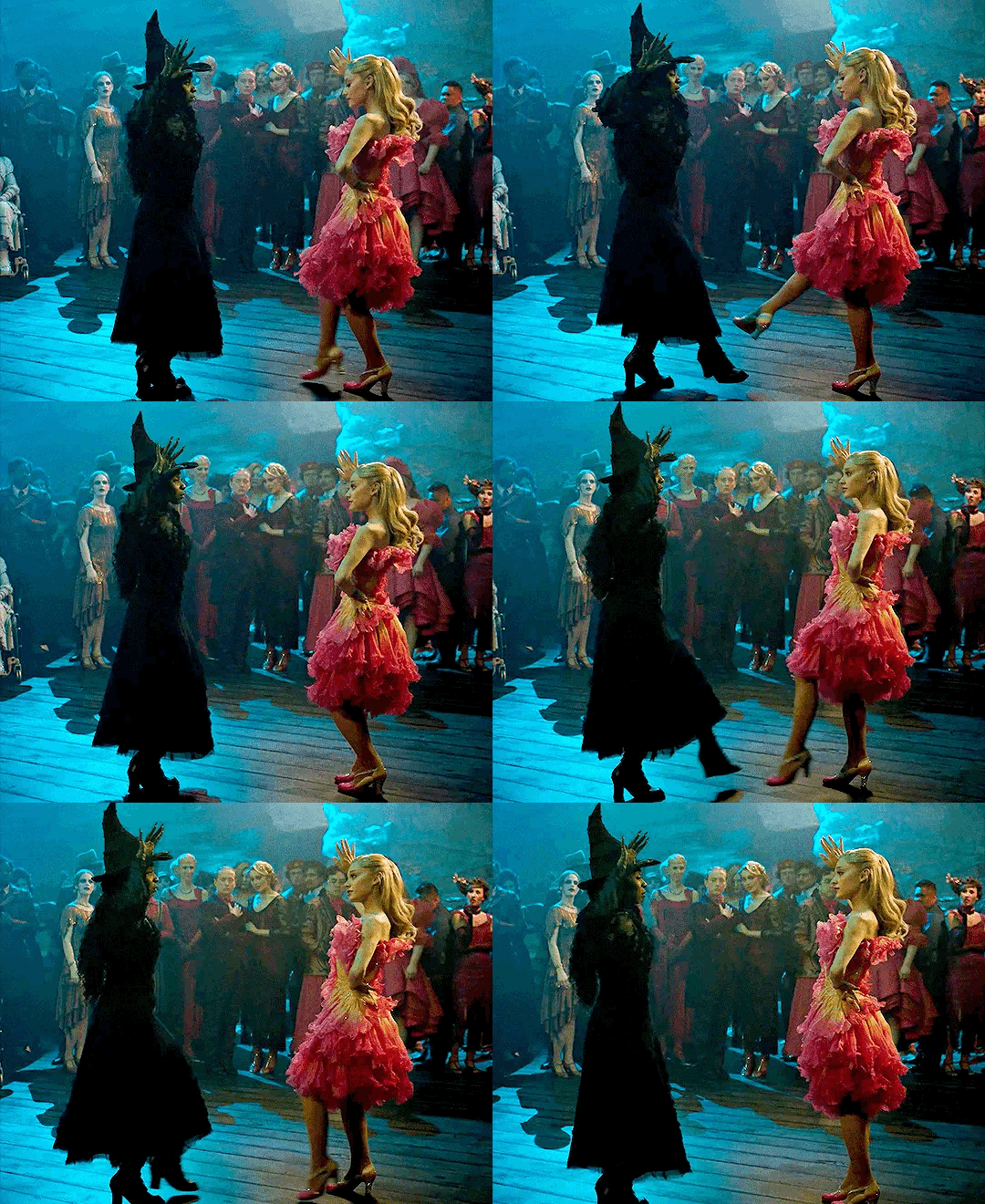
While parents cannot solve their teenagers’ social challenges, there may be places where we can join them on the dance floor, especially when others scorn them. We can start with appreciating their differences, rather than expecting them to behave according to our preferences. Perhaps we can let go of trying to force them into our mold of what we think is acceptable. We can affirm that God has made our kids beautiful and unique. Maybe this is our chance to learn their “dance.”
In contrast with Glinda, Elphaba’s father consistently rejected her, delegating her upbringing to a talking bear. Her appearance and her abilities embarrassed him. His criticism of her only deepened her own sense of alienation and her emotional volatility. As much as possible, I want to be a parent who helps to bring peace and love to my child, rather than dissonance, condemnation or shame.
Sometimes joining our kid on the dance floor might mean advocating for her to others who don’t understand her. Maybe it means asking for accommodations in a school setting; other times, it might mean insisting that others speak of him honorably. Maybe it means that we simply enjoy them without comparing them to others.
Find Their People
Sometimes our kids need communities where they can connect with folks who speak their language. Maybe we pray for a “Glinda” who will join our kid on the dance floor, who will become a genuine friend for a season. Sometimes we can find groups of other neurodiverse teens for our kids to connect with. Ellie is part of a neurodiversity group at college, which has provided both a social outlet and guidance in navigating adulthood. We’ve also explored online groups for autistic folks. Maybe we can help our teen find a group related to their special interest, whether it’s robotics or quilting or bird-watching. Finding others to connect with in a passion area helps lessen feelings of isolation and can increase our teen’s confidence.
Conclusion
Often, our teens realize they are different from neurotypical society, but they may not know what to do with the dissonance they experience. Elphaba knows she perceives the world in ways that don’t mirror her classmates, but she wisely chooses not to try to make herself over in their image. Yet that doesn’t mean that she doesn’t carry pain, even trauma, from the weight of those differences. Elphaba gives us a window into her world of hurt when she says to Madame Morrible, “No one should be scorned or laughed at or looked down upon….”.
Whether our own teen is neurodiverse, each of us has a responsibility to help make our communities safe for those who are. As we offer empathy and acceptance to our teens and others around us, our teens accept themselves. When we nurture their talents rather than zeroing in on their deficits, we help them gain confidence. As we join them in their unique dance, we see their beauty and help them know they aren’t alone.
But ultimately, maybe the question isn’t only how to help our kids fit into a neurotypical world. Maybe it’s whether we are brave enough to join them on their dance floor—and dance with them joyfully.
I’d love to hear from you. What resonated for you with Wicked? What do you think about my theory that Elphaba is neurodiverse? What have you done to support your kid with differences?
Grateful for your companionship on the journey,
P.S. Before you go, please tap the little ♡. It offers “social proof” and lets others know there’s something useful here. Thanks!
As a AuDHD woman I immediately realized Elphaba was neurodivergent.
But as a pre-law student, I wrote a socio-legal analysis on wicked:
https://open.substack.com/pub/legallymaya/p/what-does-wicked-2024-teach-us-about?r=1kubok&utm_medium=ios
Until today, I had no Idea what Wicked was about. But everything you said should be at the heart of all our conversations, communities, and interactions. Whether neurodiverse or not, we should all respectfully share the planet and treat each other with humility. I totally get this quote you used: , “No one should be scorned or laughed at or looked down upon….”. I am different from every other person and every other person is different from me. That doesn't make me better or worse. It just means different.
I hope you're gathering all your wise words into a book because people need what you share.